


In software architecture, durability is not merely a matter of routine node maintenance; it is an economic and architectural challenge. Pilot initiatives routinely collapse post-funding because they confuse technical feasibility with long-term ecosystem viability. If running a connector costs more in maintenance and administrative friction than the business value it unlocks, the network dissolves. To avoid repeating the failures of earlier distributed systems, we must heed Tim O’Reilly’s ‘Architecture of Participation.’ The web expanded exponentially because open protocols (HTTP, HTML) commoditized the bottom layers and minimized the marginal cost of participation. When data spaces rely on heavy, bespoke, vendor-tethered stacks, integration friction skyrockets and the total cost of ownership (TCO) kills consortium adoption. Economic sustainability demands lightweight, vendor-neutral protocols where entry barriers remain negligible and network effects outpace operational expenses.
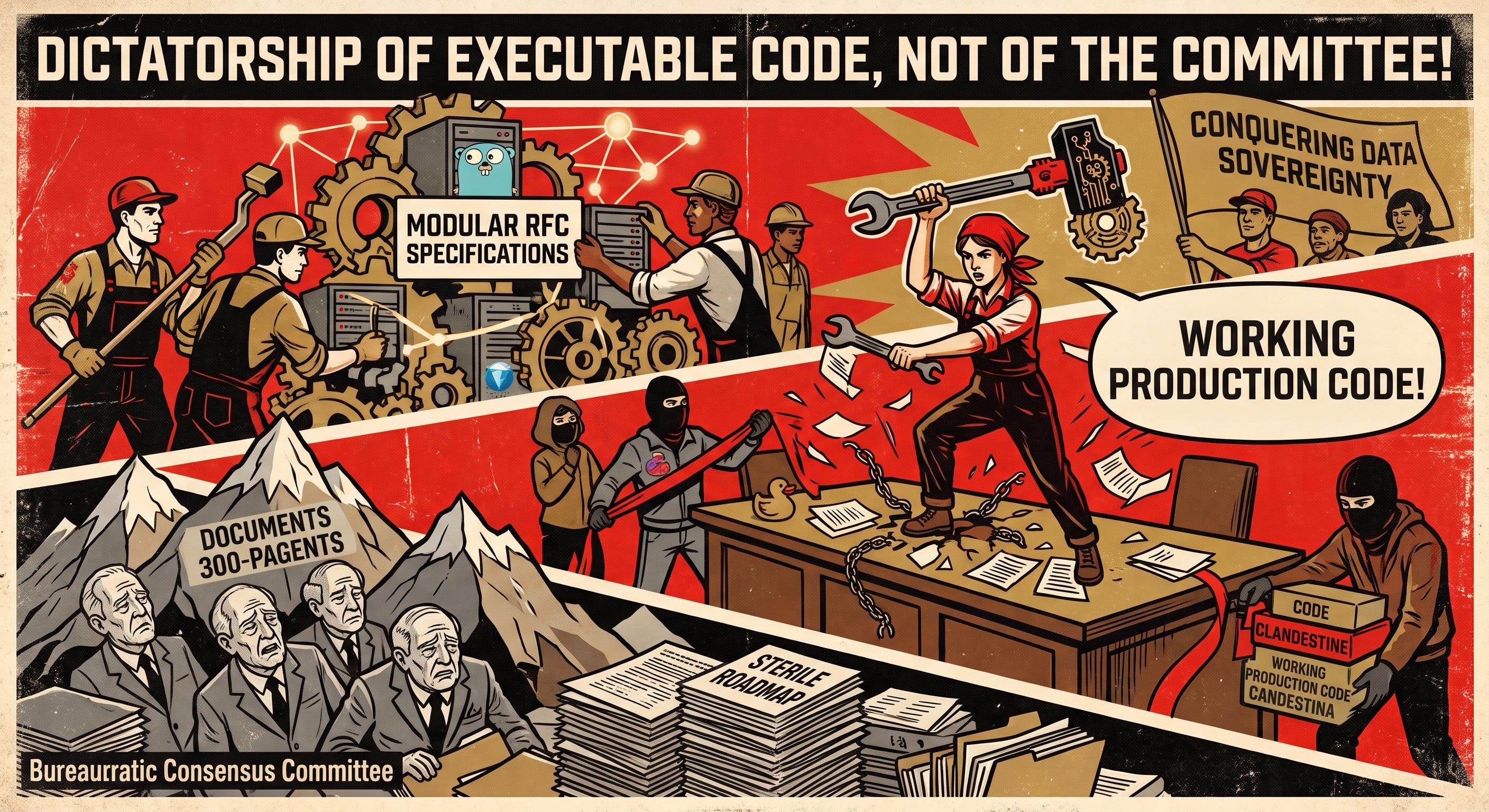
At the technical level, the greatest operational threat is ‘federated architectural drift’—the quiet divergence of local connector dialects that fractures consortia into isolated silos. Countering this requires Longevity by Design: decoupling operational layers, standardizing shared interfaces, and institutionalizing Architecture Decision Records (ADRs) to retain collective engineering memory across multi-year lifecycles. Make them AI ready RuleBooks for the data spaces. Crucially, governance cannot degenerate into an expensive bureaucracy of static spreadsheets and retrospective legal audits that inflate transaction costs.
Here is where computable governance enters the economic equation: adopting machine-executable data contracts and automated policy enforcement at runtime. Automating verification slashes compliance overhead, transforming federated data sharing from a costly legal headache into a transactionally efficient alternative to brittle bilateral integrations. Data spaces will not endure on regulatory mandates or perpetual public subsidies. They will survive only when architected as low-friction, participatory utilities—where decentralized governance lowers transaction costs, open protocols eradicate lock-in, and sovereignty delivers clear economic return.
More to come on computable governance and low-friction architectures. Hit follow to join the discussion…